
Monthly Market Update for November: Volatility Amid AI and Fed Uncertainty



|
In November, markets experienced a brief period of volatility that affected many asset classes. While major indices have delivered strong year-to-date returns across stocks, bonds, and international investments, investors continue to worry about artificial intelligence-related stocks and the path of Fed rate cuts. At the same time, the government shutdown delayed the publication of key economic reports, making it more difficult to judge how the economy is doing. Despite this market volatility, many asset classes stabilized and rebounded by the end of the month. For long-term investors, this underscores the importance of maintaining an appropriate portfolio that can navigate the ups and downs of the market. Successful investing requires staying focused on long-term goals rather than chasing short-term performance or reacting to headlines. What drove November’s performance and how can investors maintain perspective as we approach the end of the year? Key Market and Economic Drivers in November
Markets briefly experienced a "risk off" environment
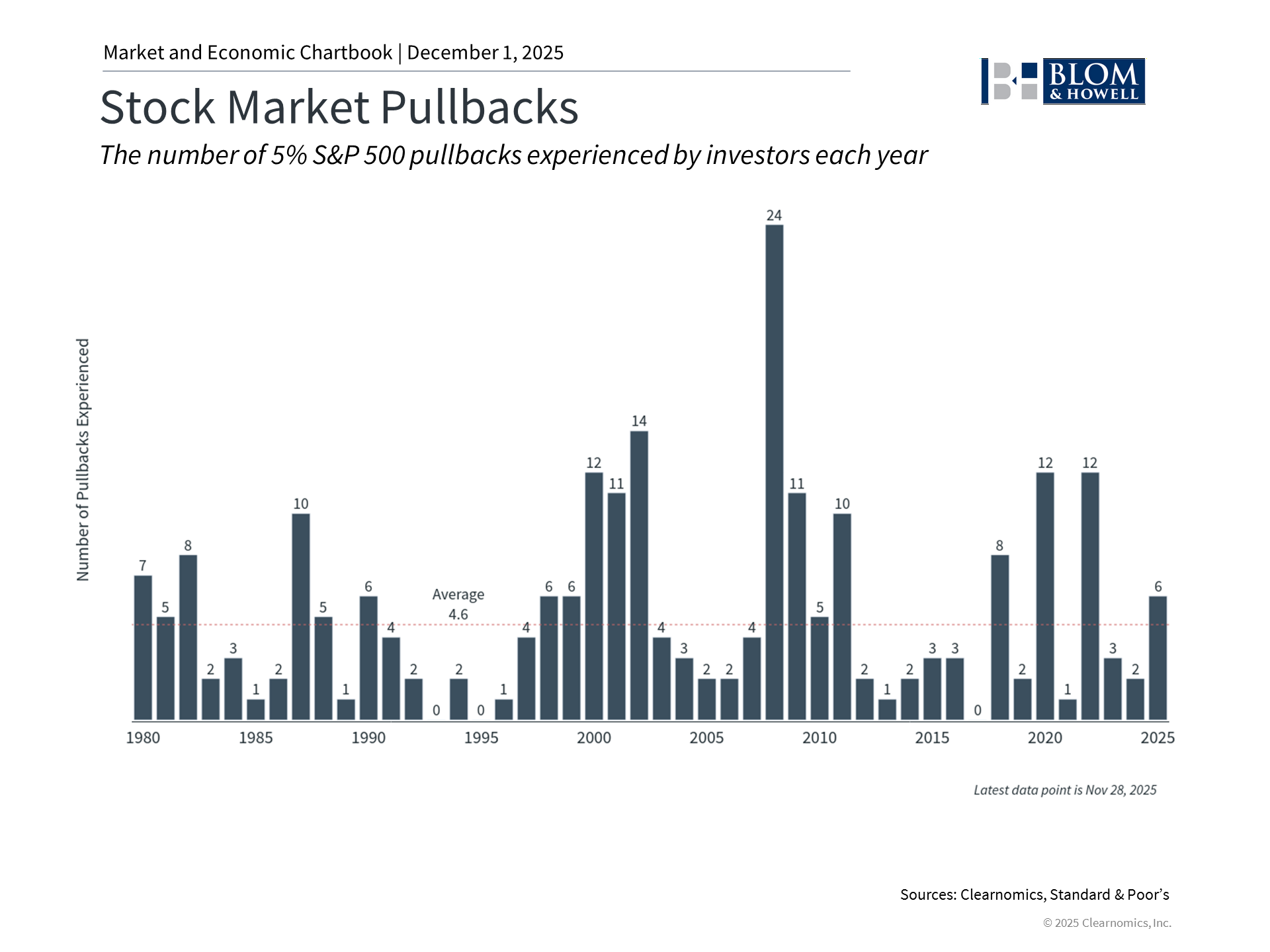
November saw investors temporarily move away from risk assets such as technology stocks, high-yield bonds, cryptocurrencies, and other investments. This was primarily due to questions around the sustainability of AI investments and investors adjusting their expectations around upcoming Fed rate cuts. There have now been six declines of 5% or worse for the S&P 500 this year, the most since 2022 but still close to the historical average. Some major asset classes rebounded in the final days of the month, and the S&P 500 ended slightly positive. During the month, AI-related technology stocks experienced their worst week since April. Concerns about their spending and debt levels, profit margins, and questions around a potential bubble created volatility. Yet beneath this, fundamentals remained strong with companies such as Nvidia reporting healthy revenue and earnings growth for the third quarter. Some stocks, including those in the Magnificent 7, rebounded following these reports. Cryptocurrencies experienced a sharp correction during this risk-off period. Bitcoin fell over 30% from its early October highs above $125,000, briefly trading below $85,000 and wiping out its year-to-date gains. While the adoption of cryptocurrencies by investors has grown, such periods demonstrate that these and similar assets can be highly speculative and prone to boom-and-bust cycles. For this reason, ongoing risk management and maintaining a proper asset allocation continue to be important. The bond market rose in November, partly driven by a decline in long-term interest rates with the 10-year Treasury yield briefly falling below 4% once again. This was the result of new expectations around government policy which could result in lower rates in the long run. Year-to-date, the Bloomberg U.S. Aggregate Bond Index has gained 7.5%, the best performance since 2020. This has helped provide balance to diversified portfolios. The government shutdown ended but economic uncertainty remains
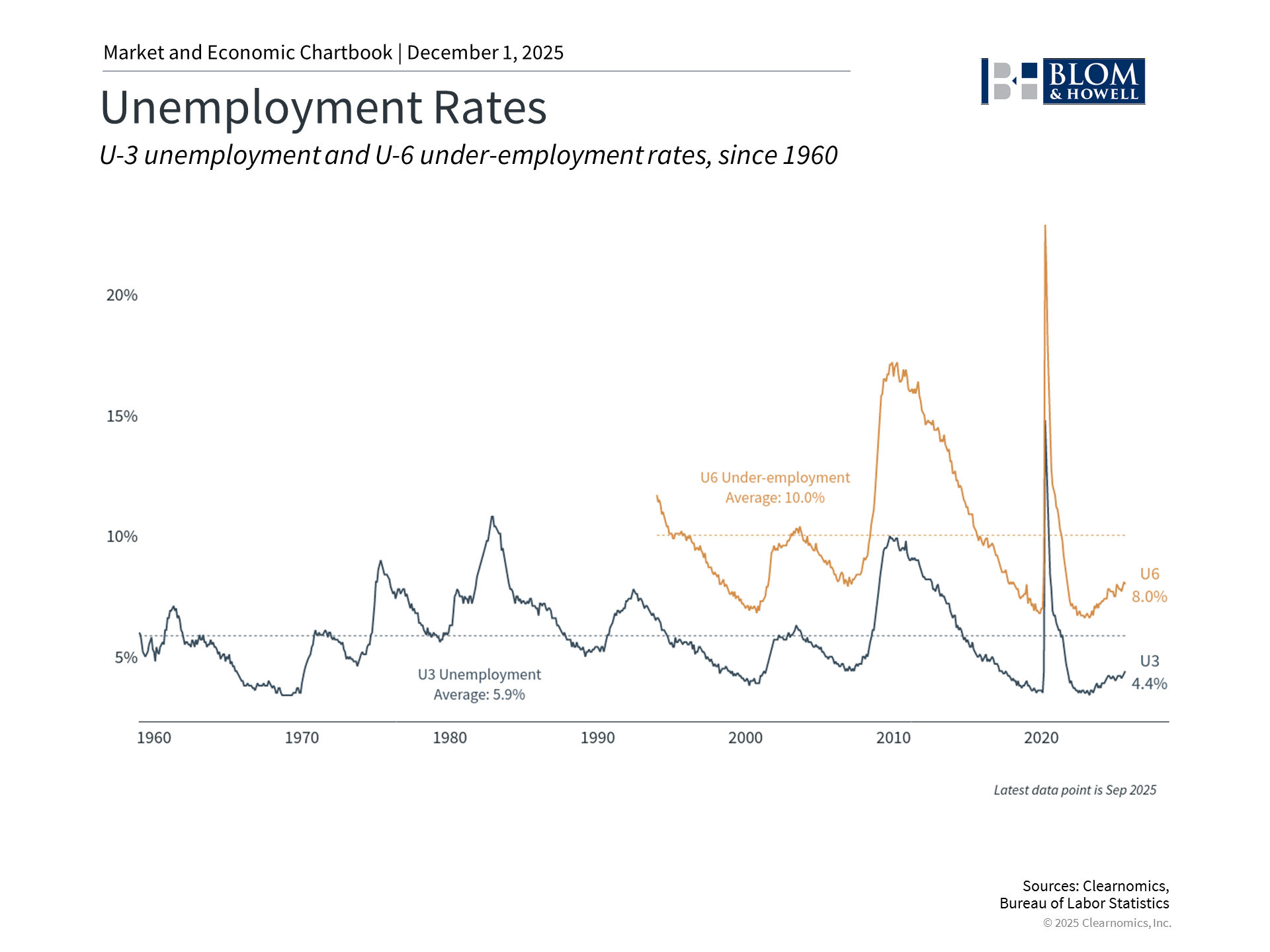
The longest government shutdown in history ended after 43 days, but the federal government will only be fully funded through the end of January 2026. This means that political uncertainty will be in the headlines again in only a couple of months. That said, markets were generally able to look past the shutdown, even with greater challenges due to a lack of economic data. The Bureau of Labor Statistics released the long-awaited September jobs report, which was originally scheduled to be published in October. This report showed that job gains exceeded expectations that month, rebounding from weakness over the summer. However, the revised figures show that 4,000 jobs were lost in August, the second month of negative jobs growth this year. The unemployment rate edged up to 4.4% in September, its highest level since October 2021, although this is still low by historical standards. A full October jobs report will not be published since surveys of households and businesses were not conducted during that month, but some of the data will be published with November’s report on a delayed basis. Market expectations for the next Fed rate cut have shifted
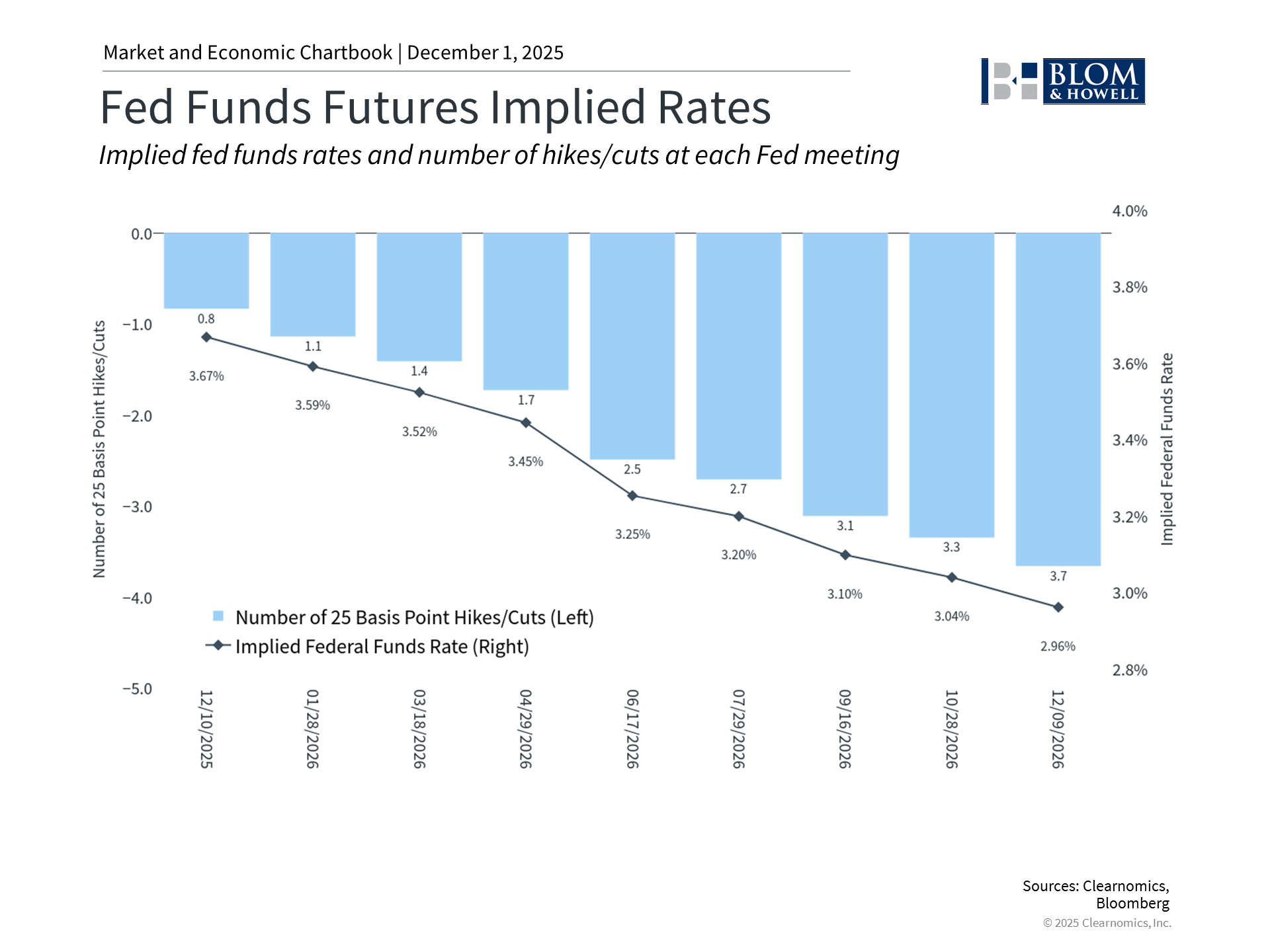
These data delays mean that the Federal Reserve will enter its mid-December meeting without the full economic picture. Expectations for a rate cut at the next Fed meeting have shifted dramatically, with the probability dropping in mid-November before rebounding once again. At the moment, market-based expectations suggest the Fed will cut rates in December and then again in April or June 2026. Other economic data, such as consumer confidence, have also worsened. The preliminary estimate of the University of Michigan’s Index of Consumer Sentiment declined from 53.6 to 50.3 in November. This reflects ongoing concerns among Americans about job security, higher prices, and their overall financial situations. While many households are feeling the financial pinch, poor sentiment over the past few years has not translated into reduced spending or corporate revenues. The bottom line? November’s market volatility and ongoing uncertainty across the economy are reminders that swings in the stock market are normal. Investors should maintain a broader perspective as we approach year end. |
|||
|
Investment advisory services are provided by Blom & Howell Financial Planning, Inc. Copyright (c) 2025 Clearnomics, Inc. All rights reserved. The information contained herein has been obtained from sources believed to be reliable, but is not necessarily complete and its accuracy cannot be guaranteed. No representation or warranty, express or implied, is made as to the fairness, accuracy, completeness, or correctness of the information and opinions contained herein. The views and the other information provided are subject to change without notice. All reports posted on or via www.clearnomics.com or any affiliated websites, applications, or services are issued without regard to the specific investment objectives, financial situation, or particular needs of any specific recipient and are not to be construed as a solicitation or an offer to buy or sell any securities or related financial instruments. Past performance is not necessarily a guide to future results. Company fundamentals and earnings may be mentioned occasionally, but should not be construed as a recommendation to buy, sell, or hold the company's stock. Predictions, forecasts, and estimates for any and all markets should not be construed as recommendations to buy, sell, or hold any security--including mutual funds, futures contracts, and exchange traded funds, or any similar instruments. The text, images, and other materials contained or displayed in this report are proprietary to Clearnomics, Inc. and constitute valuable intellectual property. All unauthorized reproduction or other use of material from Clearnomics, Inc. shall be deemed willful infringement(s) of this copyright and other proprietary and intellectual property rights, including but not limited to, rights of privacy. Clearnomics, Inc. expressly reserves all rights in connection with its intellectual property, including without limitation the right to block the transfer of its products and services and/or to track usage thereof, through electronic tracking technology, and all other lawful means, now known or hereafter devised. Clearnomics, Inc. reserves the right, without further notice, to pursue to the fullest extent allowed by the law any and all criminal and civil remedies for the violation of its rights.

|
Posts you may like


What’s Driving Portfolios: The Impact of High Oil and Copper Prices


